3D modeling plays a crucial role in various industries, particularly in game development and product design. While both fields utilize 3D modeling to create compelling visuals, the techniques and objectives often differ significantly. This article explores the key differences between 3D modeling for games and product 3D modeling, highlighting their unique challenges and methodologies.
1. Purpose and Functionality
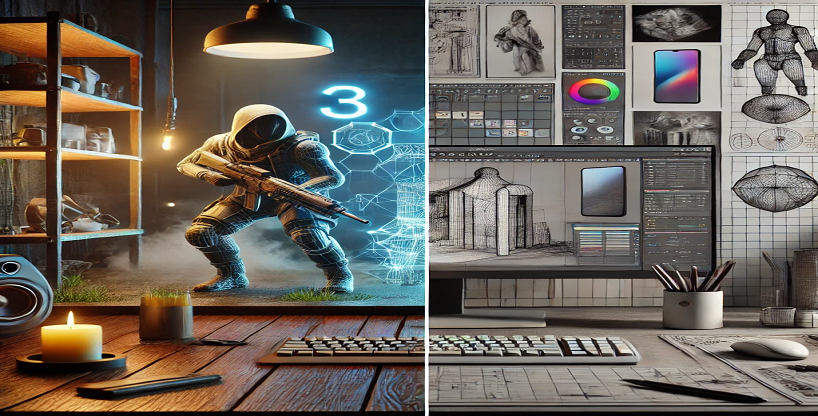
3D Modeling for Games focuses on creating interactive environments and characters that engage players. Models are designed to be optimized for real-time rendering, often requiring lower polygon counts to ensure smooth gameplay. Techniques such as normal mapping are frequently used to give the appearance of detail without increasing the model’s complexity.
On the other hand, product 3D modeling aims to create accurate representations of physical products. This includes high levels of detail for visual aesthetics and functionality, essential for marketing and prototyping. Models are typically more detailed and can include features like mechanical components for industrial design.
2. Level of Detail
In character 3D modeling for games, artists often balance detail and performance. The characters must be visually appealing while maintaining performance across various devices. Textures and materials play a vital role in achieving realistic appearances without overloading the model.
Conversely, product 3D modeling allows for higher levels of detail as the focus is primarily on visual presentation and functionality. These models may include intricate details that represent the actual product, such as textures that mimic real-world materials like metal or fabric.

3. Texturing Techniques
In gaming, textures must be optimized for performance while providing visual fidelity. Techniques like UV unwrapping and texture atlases are commonly used to enhance the model’s appearance without affecting the game’s performance. 3D modeling for VR takes this further by ensuring that textures are suitable for immersive environments.
In product modeling, artists often use advanced texturing techniques to create photorealistic finishes. The aim is to present the product as accurately as possible, which can involve complex shader setups to simulate how materials react to light.
4. Animation and Rigging
Animation is a significant aspect of 3D modeling for games. Characters require rigging to enable movement, and animations must be designed to fit gameplay mechanics. Game models are often built with this functionality in mind from the outset.
In contrast, product models typically don’t require animation. However, they may need to undergo mechanical 3D modeling for parts that simulate movement for prototyping purposes. The focus is less on fluid motion and more on accurate representations for testing and demonstration.

5. Software and Tools
Both fields utilize similar software tools, but the emphasis can differ. 3D modeling companies often use programs like Blender, Maya, or 3ds Max, depending on the project needs. Game developers may focus more on game engines like Unity or Unreal Engine for real-time rendering and interactivity.
Product 3D modeling services might lean towards CAD software like SolidWorks or Rhino, which are tailored for precision and engineering requirements. These tools facilitate the creation of models that meet industry standards for manufacturing.
Conclusion
While 3D modeling for games and product 3D modeling share fundamental principles, their applications, techniques, and outcomes vary greatly. Understanding these differences helps artists and developers choose the appropriate methods and tools for their projects, ensuring that they meet the specific demands of their respective fields.
FAQs on 3D Modeling Techniques for Games and Product Design
1. What is the primary difference between 3D modeling for games and product design?
The primary difference lies in their purpose: game modeling focuses on interactivity and performance, while product modeling emphasizes accuracy and detail for representation.
2. Which software is commonly used for character 3D modeling?
Popular software for character modeling includes Blender, Maya, and ZBrush, which allow artists to create detailed and animated models.
3. How does 3D modeling for VR differ from traditional game modeling?
3D modeling for VR requires additional considerations for immersion and performance, ensuring that models look good from all angles and maintain high frame rates.
4. Are there specialized 3D modeling companies for product design?
Yes, there are many 3D modeling agencies and companies that specialize in product design, offering services that range from concept development to photorealistic rendering.
5. Can I use the same model for both games and product presentations?
Generally, no. Models for games need to be optimized for performance, while product models require higher detail and accuracy for visual presentation.